Why "High Brightness" Isn't Always Enough
Standard high brightness monitors at 800-1500 nits work well for shaded outdoor areas and indirect sunlight. But when your display faces direct tropical sun — on an open marina deck, a desert highway digital billboard, or a south-facing EV charger — you need super bright capability: 2000 nits and above. At this luminance level, the display output can compete directly with ambient sunlight, delivering clear, readable content even at high noon in equatorial regions.
The Technology Behind Super Bright LCDs
Hi-Tni Panel Architecture
Hi-Tni (High Brightness Twisted Nematic + Film) is AplusLCD's proprietary panel technology platform for extreme luminance. Unlike standard TN panels that wash out or overheat at high brightness, Hi-Tni panels use:
- Enhanced liquid crystal materials that maintain alignment and color accuracy at high backlight intensity
- UV-resistant polarizer films that prevent yellowing and degradation from intense backlight and outdoor sun exposure
- Wide-temperature cell gap design enabling stable operation from -30°C to +85°C
- High-transmission color filters that maximize light throughput without sacrificing color gamut
Advanced LED Backlight Systems
Achieving 3000-4000 nits requires backlight systems fundamentally different from standard displays. AplusLCD super bright monitors feature:
- Direct-lit LED arrays with high-density placement — up to 4x more LEDs than standard backlights
- High-efficiency LED drivers with active current regulation to maintain consistent brightness across the panel
- Aluminum substrate PCBs for superior heat dissipation from the LED array
- Integrated thermal sensors with automatic brightness throttling if safe temperature limits are approached
- Redundant LED strings in mission-critical models — if one string fails, others maintain partial brightness
Optical Bonding: Mandatory at 3000+ Nits
At 3000+ nits, optical bonding transitions from "recommended" to "practically mandatory." Here's why: with a 3000-nit backlight, even 8% surface reflection represents 240 nits of glare competing with your content. Optical bonding eliminates both internal reflective surfaces, ensuring that every nit of backlight output translates to visible image quality. The result is a display that appears dramatically brighter and more contrasty than a non-bonded display with the same backlight specs.
Engineering Note
A 3000-nit display without optical bonding will appear less readable in direct sunlight than a 2000-nit display with optical bonding. Always factor optical treatment into your brightness specification.
Brightness Comparison: Standard vs High vs Super Bright
| Category | Brightness | vs Standard (300 nit) | Best For |
|---|---|---|---|
| Standard Monitor | 250-350 nits | 1x (baseline) | Indoor office, dim environments |
| Bright Indoor | 400-700 nits | 1.3-2.3x | Well-lit retail, window-adjacent |
| High Brightness | 800-1500 nits | 2.7-5x | Shaded outdoor, semi-outdoor kiosk |
| Super Bright | 2000-4000 nits | 6.7-13.3x | Direct sunlight, marine deck, desert |
Real-World Applications for Super Bright Displays
Open-Deck Marine Navigation
Ship bridges and open decks present the ultimate display challenge: direct sun reflection off water, salt spray, and constant vibration. AplusLCD 2500-3000 nit displays with optical bonding, IP67 stainless steel bezels, and anti-reflective coating are deployed on commercial vessels, yachts, and offshore platforms. The Hi-Tni panel's -30°C to +85°C range handles Arctic to tropical deployments.
Desert & Tropical Outdoor Digital Signage
Outdoor advertising in Dubai, Singapore, or Arizona requires displays that can handle 40°C+ ambient temperatures while competing with intense sunlight. AplusLCD 3000-4000 nit large-format displays (up to 86") with active thermal management and auto-dimming deliver reliable operation in the world's harshest climates.
EV Charging Station HMI
Outdoor EV chargers face direct sun, rain, snow, and temperature extremes — while requiring reliable touch operation for payment and charging control. AplusLCD 2000+ nit PCAP touch displays with optical bonding ensure users can read instructions and complete transactions in any weather, with gloved hands.
Drive-Thru Outdoor Menu Boards
QSR drive-thru lanes face south or west in many locations, meaning afternoon sun directly hits the display surface. A 2500-nit super bright menu board with anti-reflective coating ensures customers can read the menu and promotional content without squinting or delays — directly impacting order speed and revenue.
Construction & Mining Equipment
Heavy machinery operates in open-pit mines and construction sites with zero shade and extreme dust. AplusLCD 1500-2500 nit rugged displays with anti-glare treatment, wide temperature operation, and high vibration tolerance keep operators informed in the toughest conditions on Earth.
Thermal Management for Super Bright Displays
At 2000+ nits, thermal management becomes a primary engineering concern. A 4000-nit backlight generates significant heat that must be dissipated to protect the LCD panel, LED drivers, and control electronics. AplusLCD employs multiple thermal management strategies:
- Aluminum chassis acts as a passive heatsink — drawing heat away from the backlight and panel
- Vented enclosure design with dust filters for outdoor installations that can accommodate airflow
- Integrated thermal sensors at multiple points — backlight, panel surface, ambient
- Intelligent brightness management — automatic reduction if panel temperature approaches safe limits (configurable threshold)
- Optional active cooling — low-noise fans for sealed enclosures in extreme climates
- Power derating curves provided for system integrators designing enclosures
AplusLCD Super Bright Products
| Product | Max Brightness | Size Range | Key Technologies |
|---|---|---|---|
| Hi-Tni LCD Panel | 4000 nits | 6.5" - 86" | Hi-Tni, 4K, -30°C to +85°C, multi-brand sourcing |
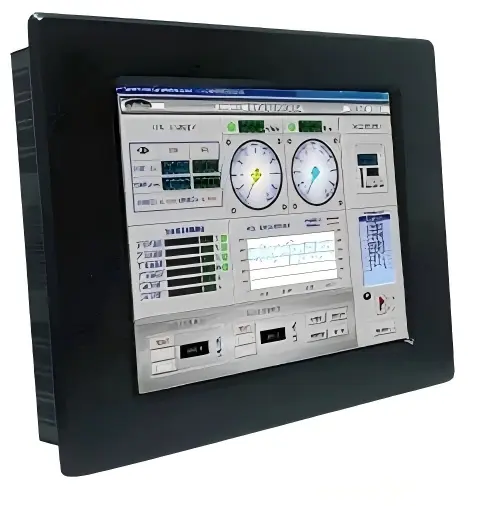
| High Brightness LCD Monitor | 3000 nits | 5" - 24" | Aluminum bezel, IP65 optional, optical bonding |
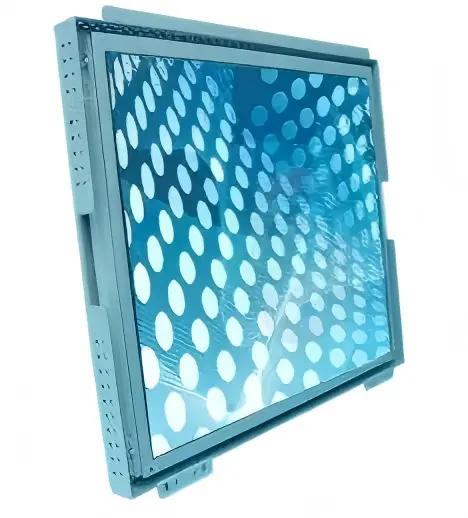
| LD Series Open Frame | 1500 nits | 7" - 19" | IPS/VA, PCAP touch optional, VESA mount |
Specify Your Super Bright Display
Every super bright application has unique requirements. Share your brightness target, size, environmental conditions, and touch needs — our engineers will recommend the optimal configuration with thermal analysis included.
Get Engineering Consultation →