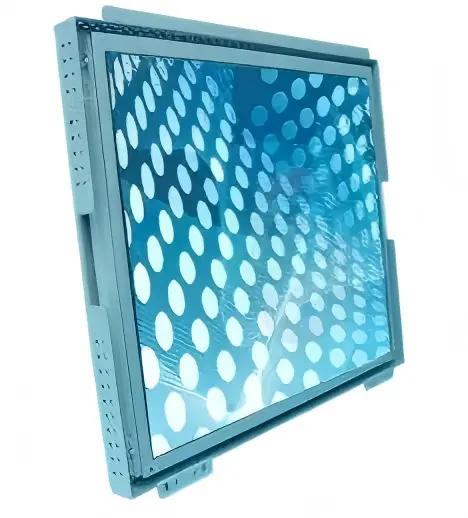
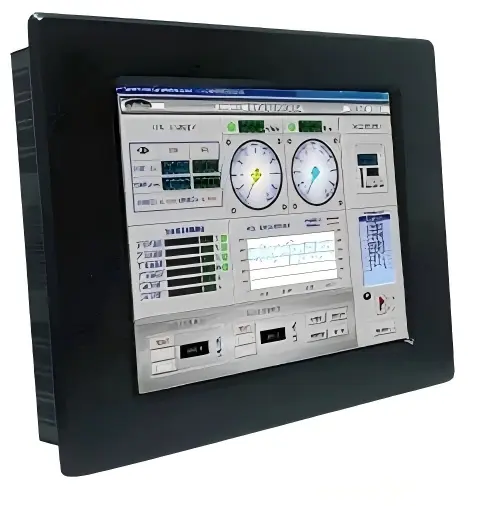
What is a High Brightness LCD Monitor?
A high brightness LCD monitor is an industrial display designed to remain visible in environments where ambient light would wash out a standard monitor. While consumer and standard office monitors typically output 250-350 nits (cd/m²), high brightness displays start at 800 nits and can reach up to 4000 nits — over 10x brighter than a standard display. This extreme luminance is essential for outdoor digital signage, sunlight readable kiosks, transportation information displays, marine navigation systems, and any application where the display faces direct or indirect sunlight.
Understanding Nits: How Bright is Bright Enough?
A "nit" (cd/m²) is the standard unit for measuring display luminance. Here's a practical guide to brightness requirements:
| Environment | Recommended Brightness | Typical Application |
|---|---|---|
| Dark room / dim office | 200-300 nits | Standard office monitor |
| Well-lit indoor | 400-600 nits | Retail, lobby displays |
| Indirect window light | 700-1000 nits | Window-facing retail, semi-outdoor kiosk |
| Shaded outdoor | 1000-1500 nits | Covered bus stop, shaded kiosk |
| Indirect sunlight | 1500-2500 nits | Drive-thru menu, outdoor ATM |
| Direct sunlight | 2500-4000 nits | Open-air signage, marine deck, construction |
Key insight: Brightness alone is not enough. Even a 3000-nit display can appear washed out without proper anti-reflective treatment or optical bonding. The most effective sunlight-readable displays combine high brightness with optical enhancements.
Key Technologies for Sunlight Readable Displays
1. High-Brightness LED Backlight
Standard LCD backlights use edge-lit LEDs at moderate power. High brightness displays use direct-lit or enhanced edge-lit LED arrays with higher drive currents and optimized thermal management. AplusLCD LED backlights are rated for 50,000+ hours of continuous operation — over 5 years of 24/7 use. This long lifespan is critical for outdoor installations where maintenance access is difficult and costly.
2. Hi-Tni (High Brightness TN+Film) Panel Technology
Hi-Tni is a specialized LCD panel technology that enables extreme luminance levels (up to 4000 nits) while maintaining a wide -30°C to +85°C operating temperature range. Unlike standard TN panels, Hi-Tni panels use enhanced liquid crystal materials and polarizers that can handle the intense backlight output without color shift or degradation. This makes Hi-Tni ideal for outdoor applications in extreme climates — from freezing winter to scorching summer.
3. Optical Bonding
Optical bonding is arguably the most impactful enhancement for sunlight readability after raw brightness. In a standard display, there's an air gap between the LCD panel and the protective cover glass. Each air-to-glass interface reflects approximately 4% of ambient light. With two such interfaces, about 8% of sunlight bounces back at the viewer, creating a washed-out, mirror-like effect.
Optical bonding fills this air gap with optical-grade silicone or epoxy resin, which has a refractive index nearly identical to glass. This eliminates the internal reflections, improving perceived contrast by up to 400% in bright environments. Additional benefits include:
- No internal condensation or fogging — critical for outdoor and marine applications
- Improved impact resistance — the bonded glass-panel structure is significantly stronger
- Reduced parallax error — important for touch screen accuracy
- Dust-proof internal cavity — no particles can enter the display stack
4. Anti-Reflective (AR) Coatings
AR coatings are thin-film layers applied to the front glass surface that reduce specular reflection from 4-8% down to less than 1%. While not as effective as full optical bonding, AR coatings provide a cost-effective improvement for applications where optical bonding is not in the budget. AplusLCD offers both standard AR coating and enhanced multi-layer AR coatings for demanding environments.
AplusLCD High Brightness Product Range
AplusLCD offers the industry's widest high brightness range — from compact 5-inch panels to massive 86-inch 4K displays. Our products cover every outdoor and bright-ambient use case:
| Product | Brightness Range | Size Range | Key Feature |
|---|---|---|---|
| High Brightness LCD Monitor | 800-3000 nits | 5" - 24" | Aluminum bezel, IP65 optional, optical bonding available |
| Hi-Tni LCD Panel | 220-4000 nits | 6.5" - 86" | 4K resolution, wide temp -30°C to +85°C, multi-brand panels |
| LD Series Open Frame | 250-1500 nits | 7" - 19" | IPS/VA panels, optional PCAP touch, sunlight readable |
Need Help Choosing the Right High Brightness Display?
Our engineers will help you specify the optimal brightness, optical bonding, and panel technology for your outdoor or bright-ambient application. No MOQ — 1 pc samples available.
Request Engineering Consultation →Industry Applications
Outdoor Digital Signage
Outdoor advertising displays face the harshest lighting conditions — direct sunlight on the screen surface. A 3000-nit display with optical bonding ensures your advertising content remains vivid and legible even at high noon. AplusLCD 4K signage displays from 32" to 86" deliver stunning visual impact for billboards, transit shelters, and outdoor retail.
Transportation & Transit
Bus stops, train platforms, and airport gates require displays that are readable in all weather and lighting conditions. Our 1500-2500 nit monitors with anti-reflective coating and wide temperature operation (-30°C to +85°C) are deployed in transportation hubs worldwide.
Marine & Offshore
Open-deck marine displays must contend with direct sunlight, salt spray, and constant vibration. AplusLCD offers 2000+ nit displays with optical bonding, IP65/IP67 weatherproofing, and 316L stainless steel bezels for the most demanding maritime environments.
EV Charging Stations
Outdoor EV chargers need touch displays that work in direct sunlight with gloved hands. Our 1500-nit PCAP touch monitors with optical bonding deliver reliable operation in temperatures from -30°C to +85°C.
Construction & Heavy Equipment
Excavators, cranes, and agricultural machinery operate in bright, dusty, high-vibration environments. AplusLCD 1000-2000 nit rugged displays with anti-glare treatment ensure operators can read critical instrumentation in any lighting condition.
How to Choose: Decision Checklist
- Determine maximum ambient light level: Is the display in shade, indirect sun, or direct sun?
- Choose brightness range: Based on the nits guide above, select 1000, 2000, or 3000+ nits
- Decide on optical bonding: Essential for direct sunlight and marine; recommended for outdoor; optional for shaded
- Consider touch requirements: PCAP for interactive kiosks; no touch for signage-only; resistive for thick gloves
- Evaluate environmental protection: IP65 minimum for outdoor; IP67 for marine/washdown; standard for indoor bright areas
- Plan thermal management: 3000+ nit displays may need active cooling in hot climates; our engineers can advise
- Budget for total cost of ownership: Higher upfront cost for optical bonding and high brightness is offset by lower maintenance and longer lifespan